Are you looking for a probate lawyer in Shreveport, LA?
At Theus Law Offices, we provide probate representation grounded in 29 years of work on behalf of clients in Shreveport.
If you have lost a loved one and need to settle their estate in Shreveport, a probate lawyer can guide you through the court process and the paperwork that follows a death. Louisiana calls this process a succession, and it tends to move faster when someone familiar with the courts handles it. Our Shreveport, LA probate lawyer can open the succession, prepare the filings, and help you transfer property to the rightful heirs. Theus Law Offices has served Louisiana families for 29 years. Contact our office to schedule a consultation and get the process started.
Probate Lawyer Shreveport, LA
Probate is the court-supervised process of settling a person’s estate after they die. It confirms who has authority to act, gathers and values the assets, addresses debts and taxes, and transfers what remains to the heirs. In Louisiana, this process is known as a succession, whether or not the person left a will.
A Shreveport probate attorney handles the filings and deadlines the court sets and keeps the estate on track. Some successions are straightforward. Others involve business interests, property in several parishes, or heirs who are hard to locate, and knowing how the probate process unfolds helps a family avoid delays and added cost. Until a succession is opened, heirs often cannot sell the property, reach certain accounts, or clear title, which is why many families begin soon after a death.
Types of Probate Cases We Handle in Shreveport
Our probate lawyers in Shreveport represent families and executors through the full range of Louisiana successions, from small estates to those with complicated assets. Every succession is a little different. The right approach depends on whether there is a will, what the estate holds, and whether the heirs agree.
- Successions. A succession is the legal transfer of a deceased person’s property to their heirs and legatees. We handle both testate successions, where there is a valid will, and intestate successions, where the law decides who inherits. The path a succession takes depends on the size of the estate and whether the heirs are in agreement.
- Ancillary probate. When a person who lived in another state owned property in Louisiana, a separate proceeding is usually required here. We represent out-of-state executors so that Louisiana property can be transferred and closed out.
- Small successions. Louisiana allows a simplified procedure for estates that fall under a set value or meet other conditions. We determine whether an estate qualifies and prepare the shorter filings that go with it.
- Independent administration. Many successions can proceed with limited court oversight when the will provides for it or the heirs consent. This often reduces the time and expense of settling the estate.
- Executor and administrator guidance. The person placed in charge of an estate takes on real duties and real exposure. We advise executors and administrators on what the court requires and how to carry it out correctly.
- Estate administration. Settling an estate involves more than a single court filing. Assets must be identified and valued, debts and taxes handled, and property distributed, and we guide families through each stage.
- Complex estates. Estates that include a business, mineral rights, or real estate in more than one parish call for extra care. We manage the added filings these assets require. Mineral and royalty interests in particular raise valuation and title questions that a generic form cannot answer.
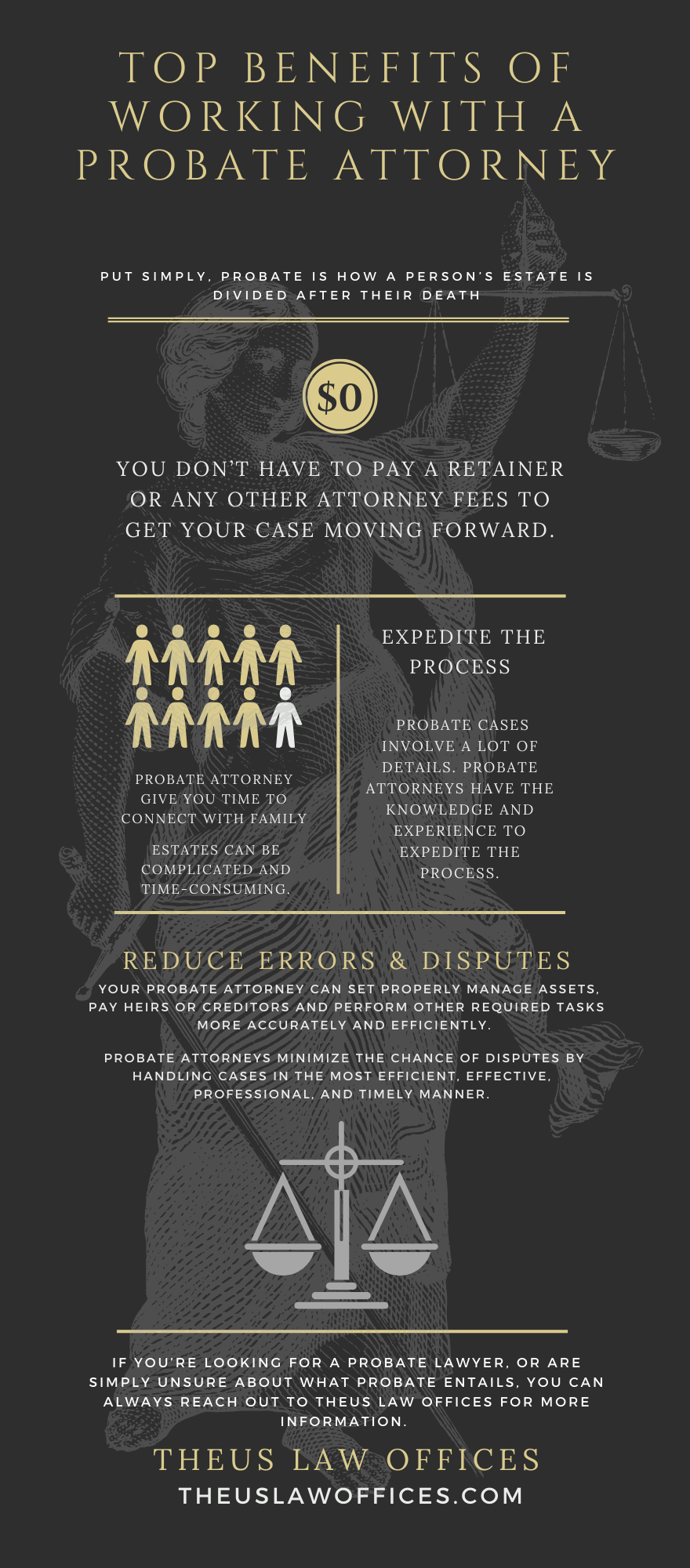
Shreveport, LA Probate Law Infographic
Why Choose Theus Law Offices as My Probate Lawyer in Shreveport, LA?
Settling an estate is stressful, and the counsel you choose should lighten that load. Probate is one part of a larger practice, and the same firm can serve as your estate planning lawyer in Shreveport, LA when you are ready to arrange your own affairs.
Board-Certified Experience You Can Rely On
The firm’s succession and estate work is led by J. Graves Theus, Jr., its managing partner. The Louisiana Board of Legal Specialization has certified him as a specialist in both Estate Planning and Administration and Tax Law, a credential few Louisiana attorneys can claim. He holds a master of laws in taxation from Boston University and a law degree, earned with honors, from Gonzaga University. Managing attorneys Clay Wirtz and Patricia L. Barfield also handle probate and succession work for the firm.
A Track Record With Louisiana Families
For nearly three decades, our attorneys have guided Louisiana families through successions of every size. We handle probate on a flat fee or an hourly basis, depending on the estate, and we explain the arrangement at the outset. Because the firm also practices tax law, we can flag the tax questions that arise when an estate holds retirement accounts or appreciated property. New clients can begin with a free consultation.
Understanding Probate in Shreveport
How Property Passes in a Louisiana Succession
A few core ideas shape how a Louisiana succession works. These are the terms you are most likely to hear.
- Testate succession applies when the person left a valid will, and the will controls who receives the property.
- Intestate succession applies when there is no will, and Louisiana law sets the order in which relatives inherit.
- Heirs inherit under the law, while legatees inherit under a will, and a succession can involve either or both.
- Forced heirship can reserve a share of the estate for children under a certain age or for those unable to care for themselves.
- Community property and separate property are treated differently, which affects what a surviving spouse receives.
- The debts of the estate must be paid before the heirs receive their shares, and some obligations outlive the person who owed them.
- The executor or administrator gathers the assets, pays valid debts, and distributes what remains, and the role carries executor’s duties the court holds them to.
Important Aspects of a Probate Case
A succession runs more smoothly when a few things are handled well from the start.
- Locating the original will and confirming it is valid, since a copy or an unsigned draft can create problems.
- Selecting an executor who is organized and willing, because the person who agrees to serve as executor takes on the estate’s obligations.
- Keeping the heirs informed, which reduces friction and keeps a simple succession from turning into a dispute.
- Steering clear of common probate mistakes, such as missing a deadline or distributing assets before debts are paid.
Probate Case Timeline
A simple Louisiana succession can close in a few months, while a larger or more involved one takes longer. Court schedules and the complexity of the assets both affect the pace. The steps generally follow the same order.
- We review the will, if there is one, and identify the heirs and the assets.
- We open the succession by filing the required petition and supporting documents with the court.
- The court recognizes the heirs or appoints an executor or administrator to act.
- The debts, taxes, and expenses of the estate are addressed.
- The property is transferred to the heirs and legatees, and the succession is closed.
What to Bring to Your Probate Consultation
Bringing a few documents to the first meeting helps us assess the estate quickly.
- The death certificate, if you already have it.
- The original will, along with any earlier wills or codicils.
- A list of the assets and their approximate value, including real estate, accounts, and vehicles.
- Information about any debts, mortgages, or unpaid taxes.
- The names and contact details of the heirs and any named executor.
At the meeting, we explain which type of succession fits, outline the steps, and give you a sense of the cost and timeline. If the estate appears to qualify for a simplified process, we will tell you that as well. You will leave knowing what happens next.
Louisiana Legal Resources for Probate Cases
Several public resources can help you understand how successions and estate taxes work in Louisiana. Use them to get oriented, not as a substitute for advice about the estate you are settling.
- The Louisiana State Legislature publishes the statutes that govern successions through its Louisiana laws search page.
- The IRS explains the tax duties that fall to the representative of a deceased person, including final income tax returns.
- The IRS also describes the federal estate tax that can apply to larger estates.
- USAGov outlines the steps for reporting a death to Social Security and other agencies while you settle an estate.
- The Louisiana Department of Health administers the Medicaid program, which can seek repayment from a succession through estate recovery.
Reach Out to Theus Law Offices to Schedule a Consultation
Settling an estate does not have to be overwhelming. Our attorneys will explain the succession process, handle the court filings, and keep things moving so you can focus on your family. Probate is handled on a flat fee or an hourly basis, and a free consultation is the place to begin. Contact us to arrange a meeting at one of our Louisiana offices.